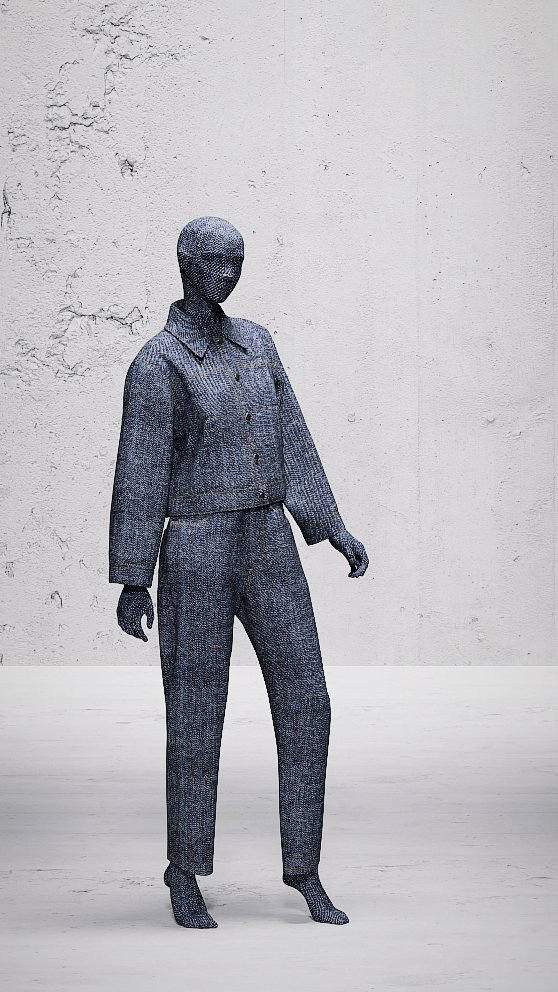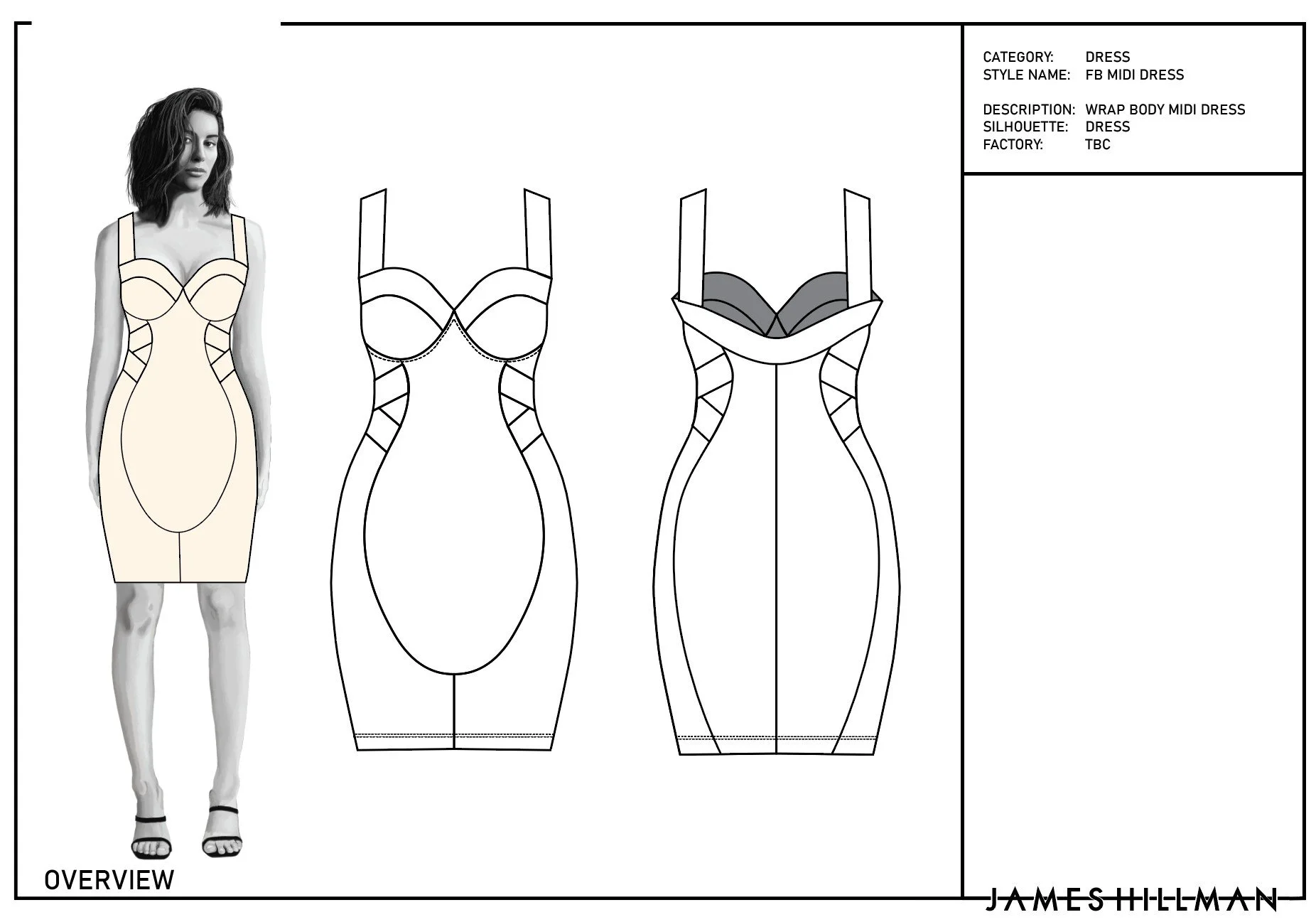
If you've been approaching manufacturers and keep hitting a wall, there's a good chance your tech pack is the problem — or you don't have one at all.
A tech pack is the document you send a factory to tell them exactly how to make your garment. Think of it as the blueprint. Without one, you're handing a builder a rough sketch and hoping for the best. With a poor one, you'll burn through sampling rounds, waste money on corrections, and still end up with something that doesn't match your vision.
Here's what a good tech pack needs to contain — and where most brands go wrong.
What Is a Tech Pack?
A tech pack (short for technical package) is a set of documents given to a manufacturer that communicates every detail of a garment — from construction to materials, labelling, sizing, and packaging.
It is not a mood board. It is not a sketch with a few notes scribbled next to it. It's a precise, production-ready specification that removes all ambiguity between your idea and the factory floor.
Most manufacturers won't take on your project without one. Those that do are often taking on more risk than they're letting on — and that risk will eventually land back on you.
What a Tech Pack Should Include
1. Cover Page
Simple but essential. Style name, style code, season, gender, creation date, and your contact details. It keeps everything organised throughout the sampling process and means factories can find the right spec quickly.
2. Technical Flat Sketches
Clean, black-and-white technical drawings of the garment — front, back, side view, and interior where relevant. These are not fashion illustrations. They need to be precise and annotated.
Every detail needs to be on the sketch: pocket placement, stitching lines, collar construction, zip type, hem finish, bartack positions. Use close-up views for anything complex.
If your sketches are vague, your samples will be too. This is one of the most common (and costly) mistakes brands make.
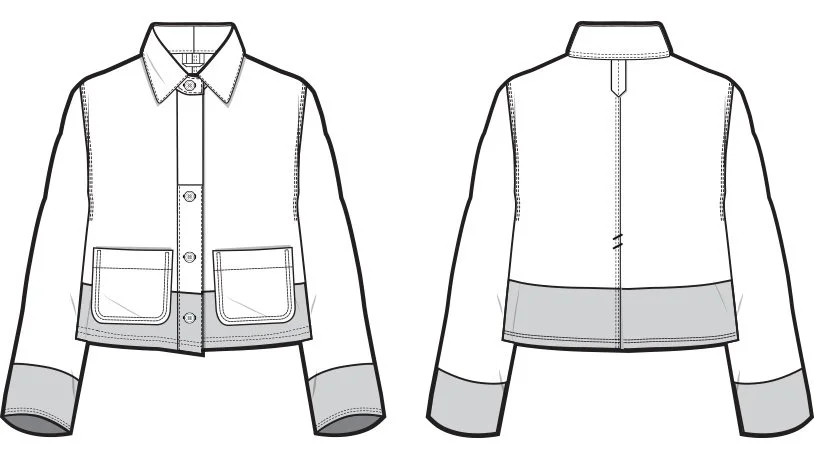
Example fo a Technical Flat Sketch
3. Measurements and Spec Sheet
Exact measurements for every key point on the garment across all sizes — chest, body length, sleeve, shoulder, neck opening, hem. You also need tolerance levels and grading rules (the size increments between each size).
A spec sheet without grading is not a complete spec sheet.
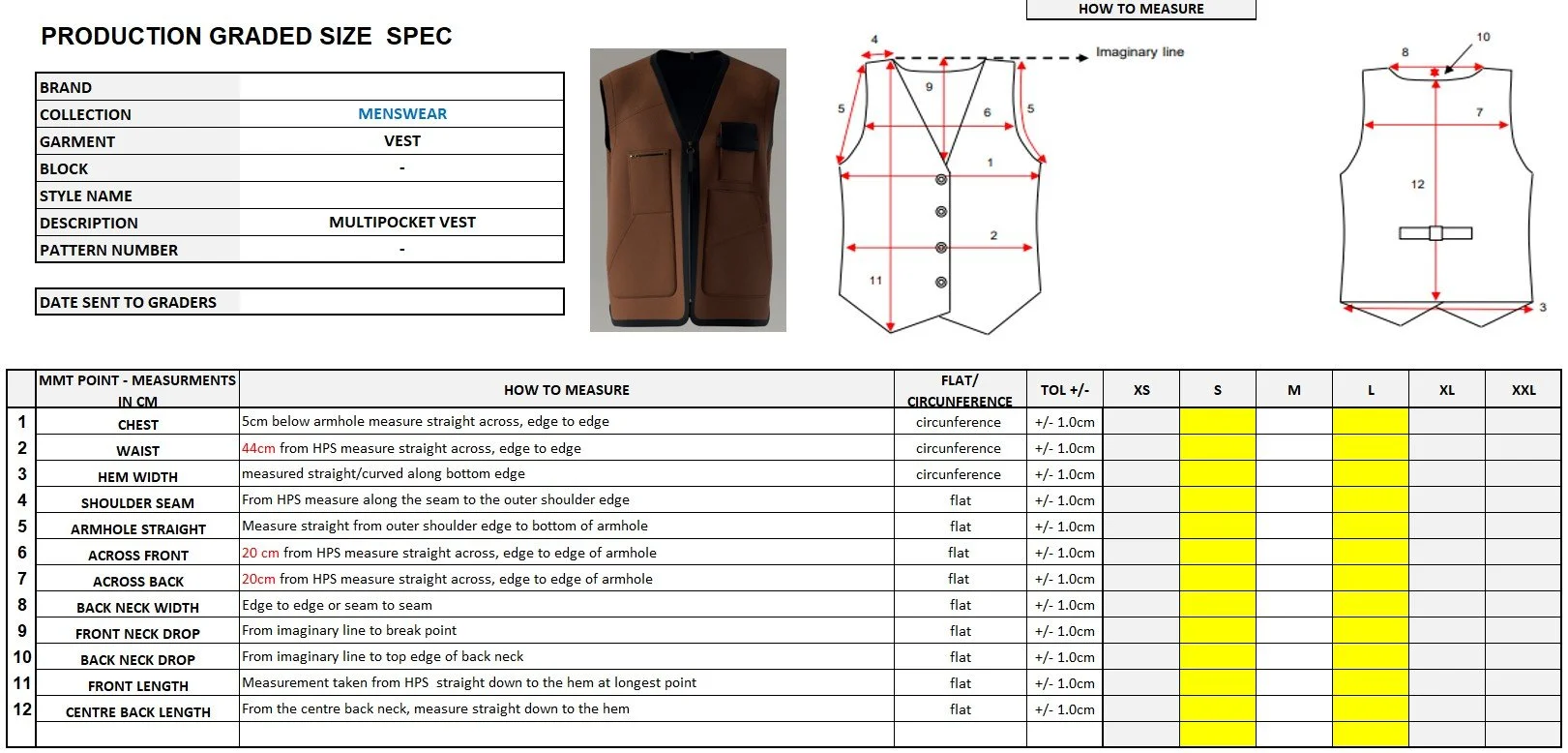
Measurement and Spec Sheet
4. Bill of Materials (BOM)
A full list of everything needed to make the garment. Not just the main fabric — everything:
Main fabric (composition, weight in GSM, finish)
Lining and interlinings
Thread colour references
Trims: zips, buttons, poppers, rivets, drawcords
Labels: brand, care, size, country of origin
Packaging: tags, polybags, hangers
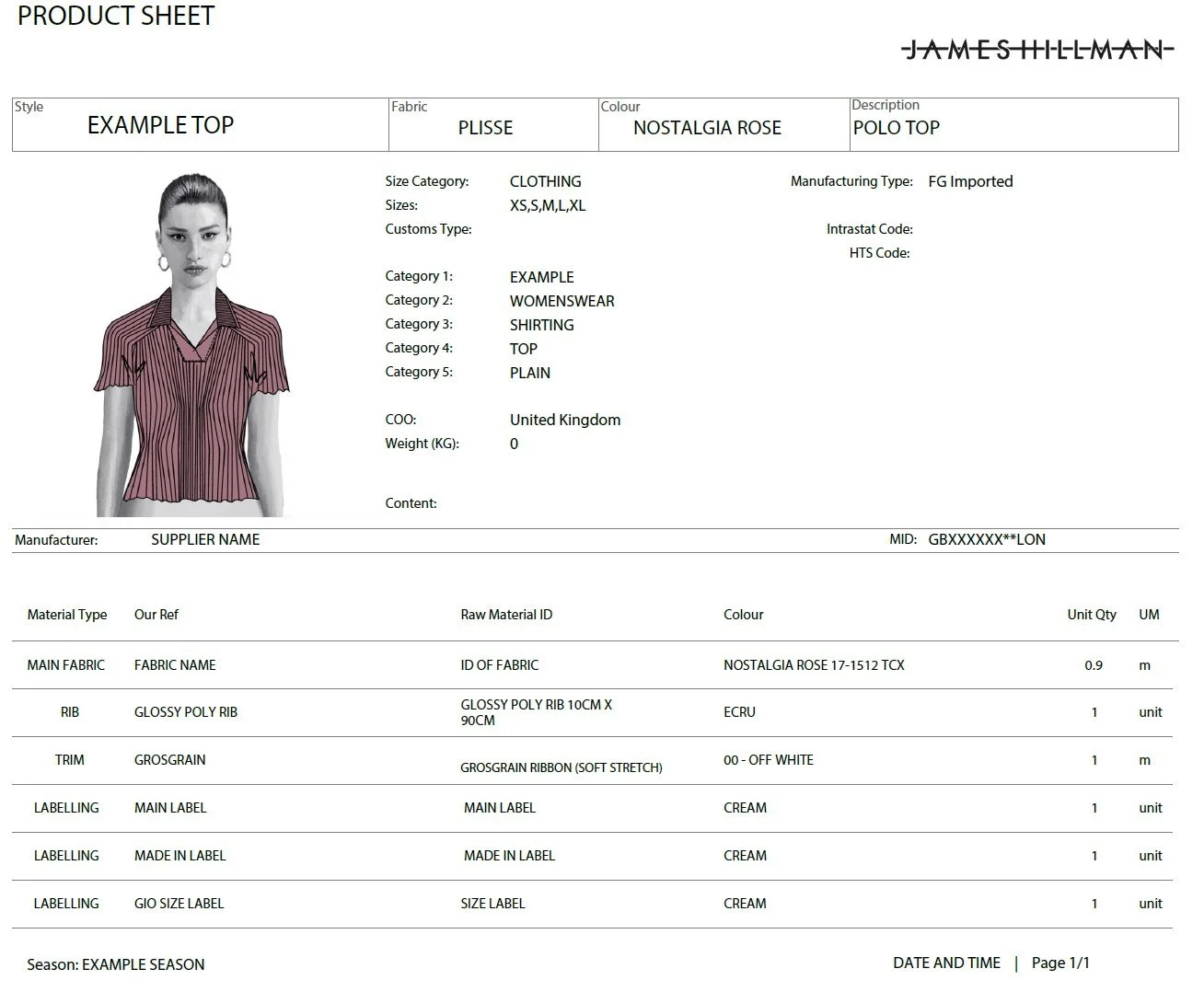
Include Pantone references where relevant. The more complete this is, the fewer questions your factory needs to ask.
5. Colourways
If your garment comes in multiple colours, each one needs to be documented with the correct Pantone code or fabric reference. Specify which trims correspond to which colourway — a navy version and a stone version won't necessarily share the same hardware.
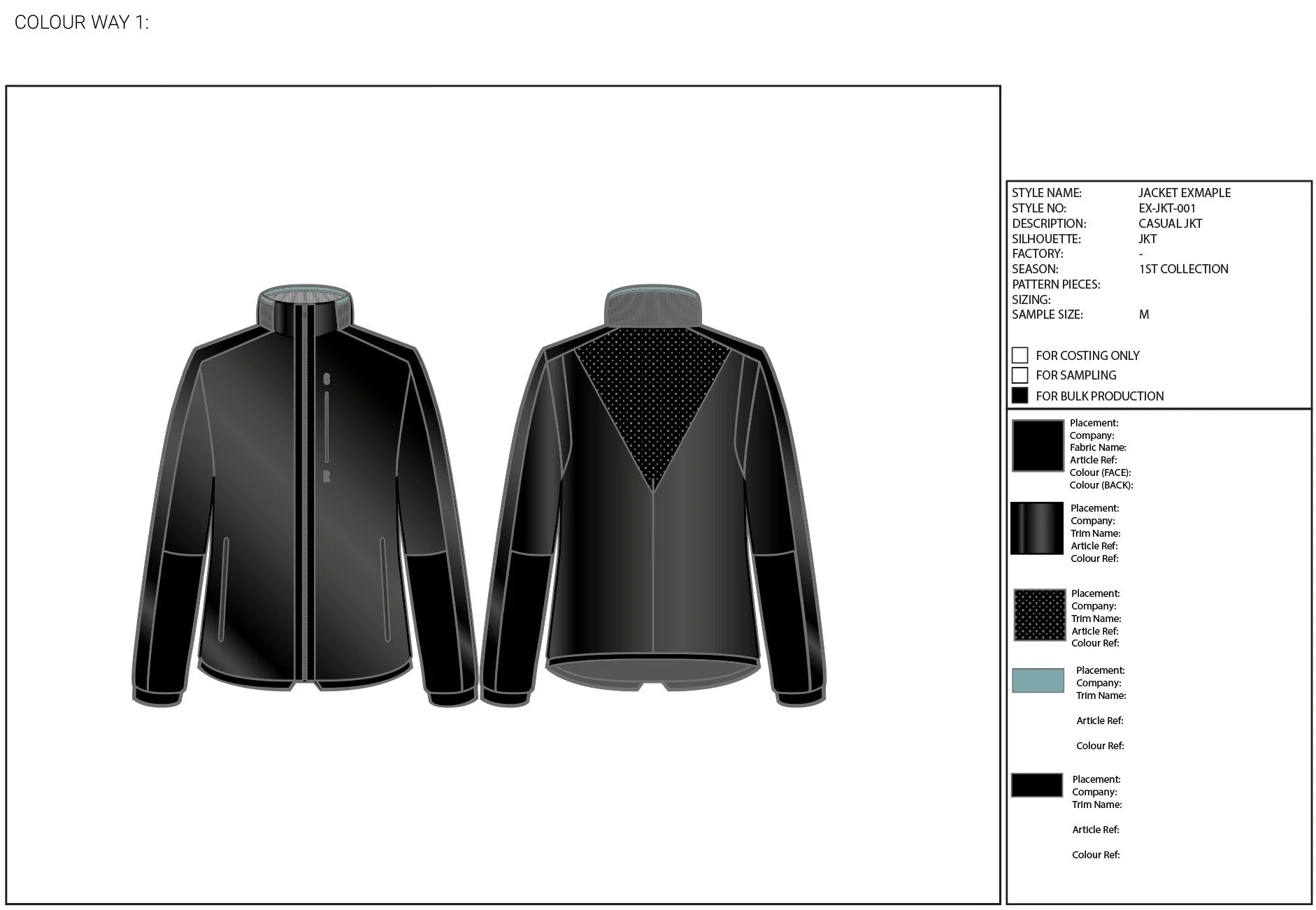
Colourway Page
6. Construction Details
How is the garment assembled? Seam types, stitch types, stitches per inch, press instructions, and any special finishes like bonding or fusing. The more specific you are here, the fewer surprises you get back from the factory.
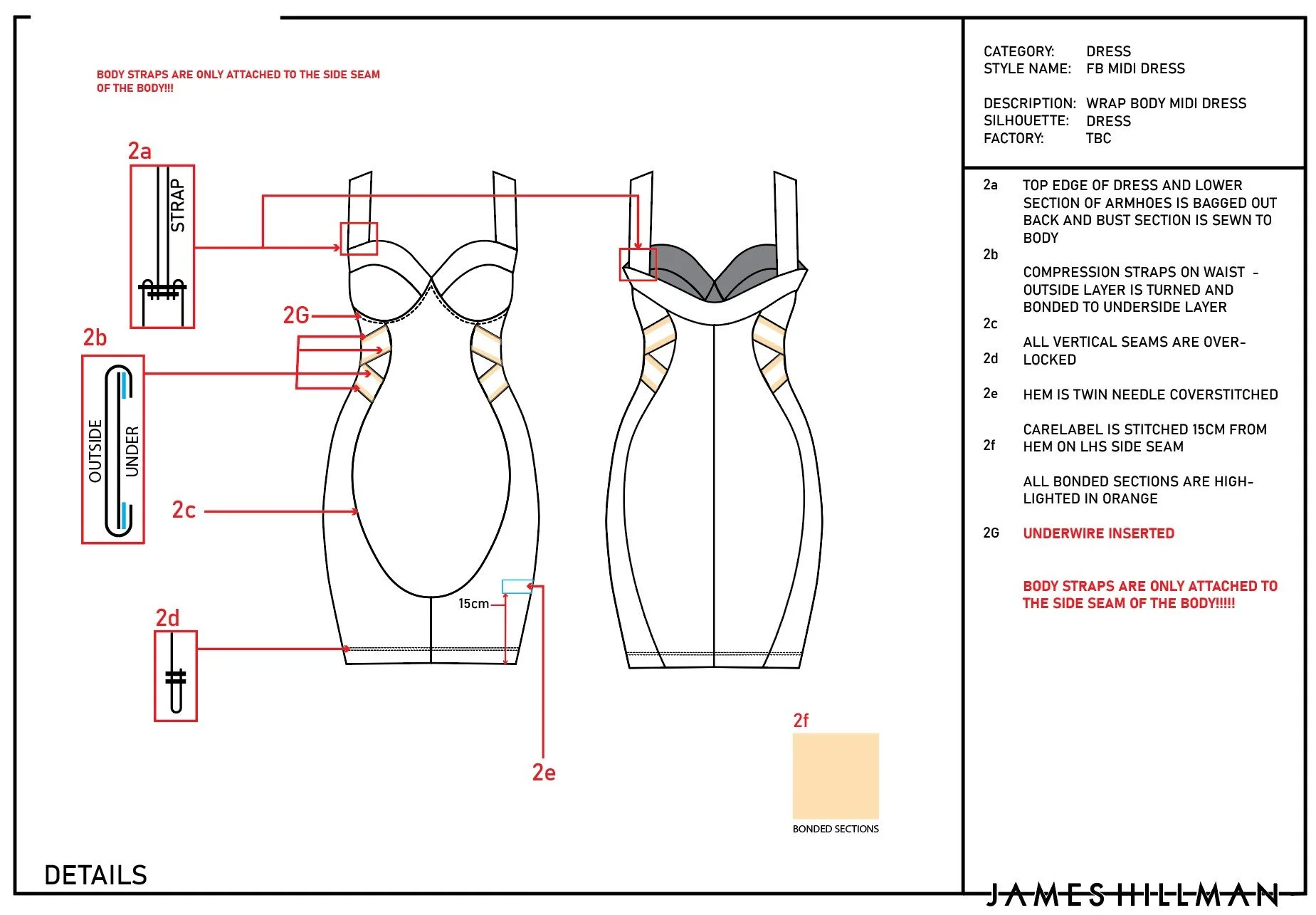
Construction Details Page
7. Packaging and Labelling
How should the finished garment be folded, tagged, and packed? This is often skipped entirely by newer brands and causes headaches further down the line.
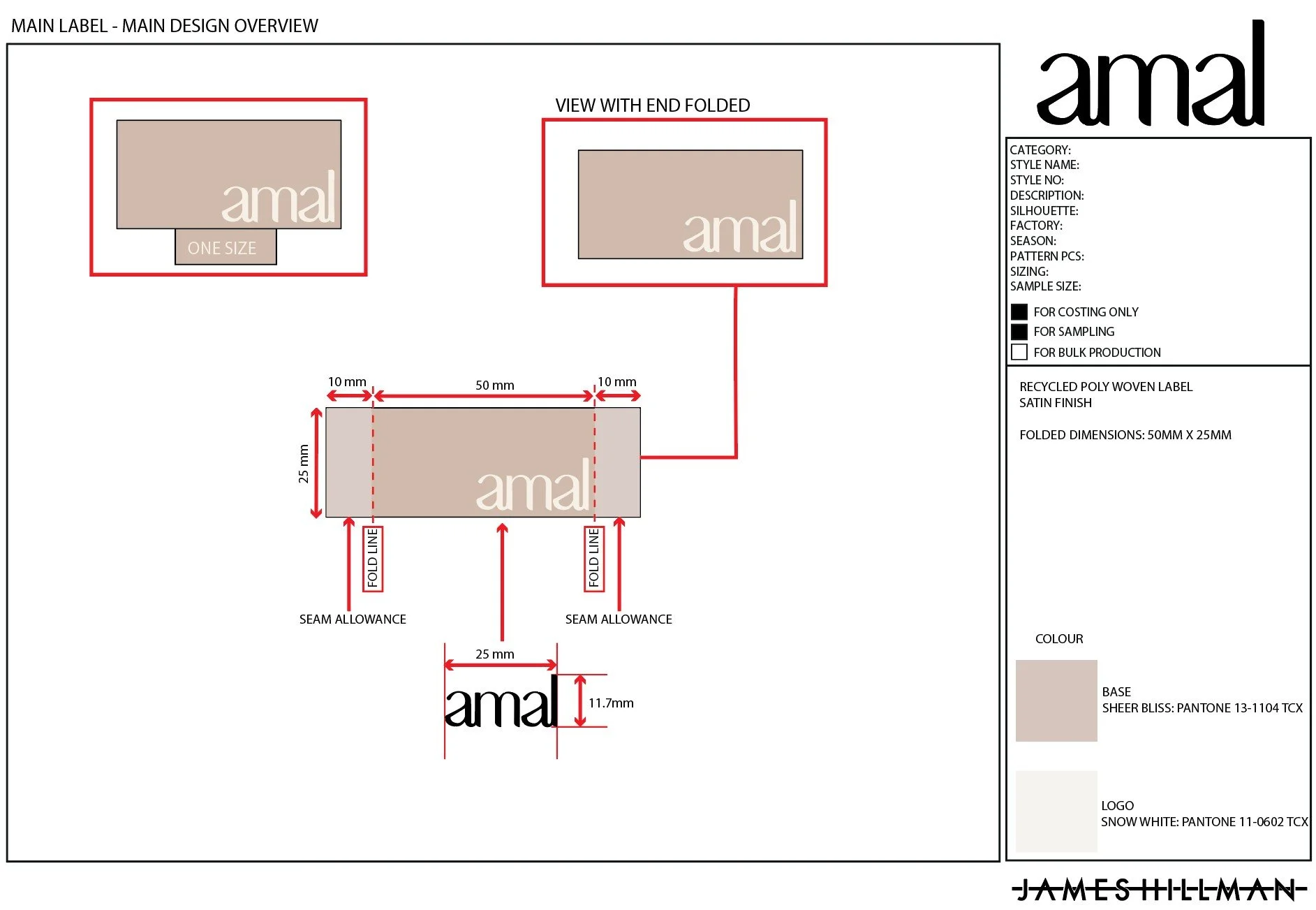
Label Technical Page
Where Most Brands Go Wrong
The most common mistakes we see are:
Sketches that are too vague. If you can't tell from the flat sketch how a collar is constructed, neither can your factory.
Missing grading. Brands often spec one size and leave it at that. Grading is not the factory's job to figure out.
Incomplete BOMs. Forgetting trims or labelling requirements leads to delays and unexpected costs.
No tolerance levels. Without them, there's no agreed standard for what counts as acceptable.
Need Help With Your Tech Pack?
Getting a tech pack right from the start saves you time, money, and a lot of frustration. At James Hillman, we produce detailed, factory-ready tech packs for brands at every stage — from first collection to scaling production.
If you'd like to talk through what you need, get in touch for a free consultation.